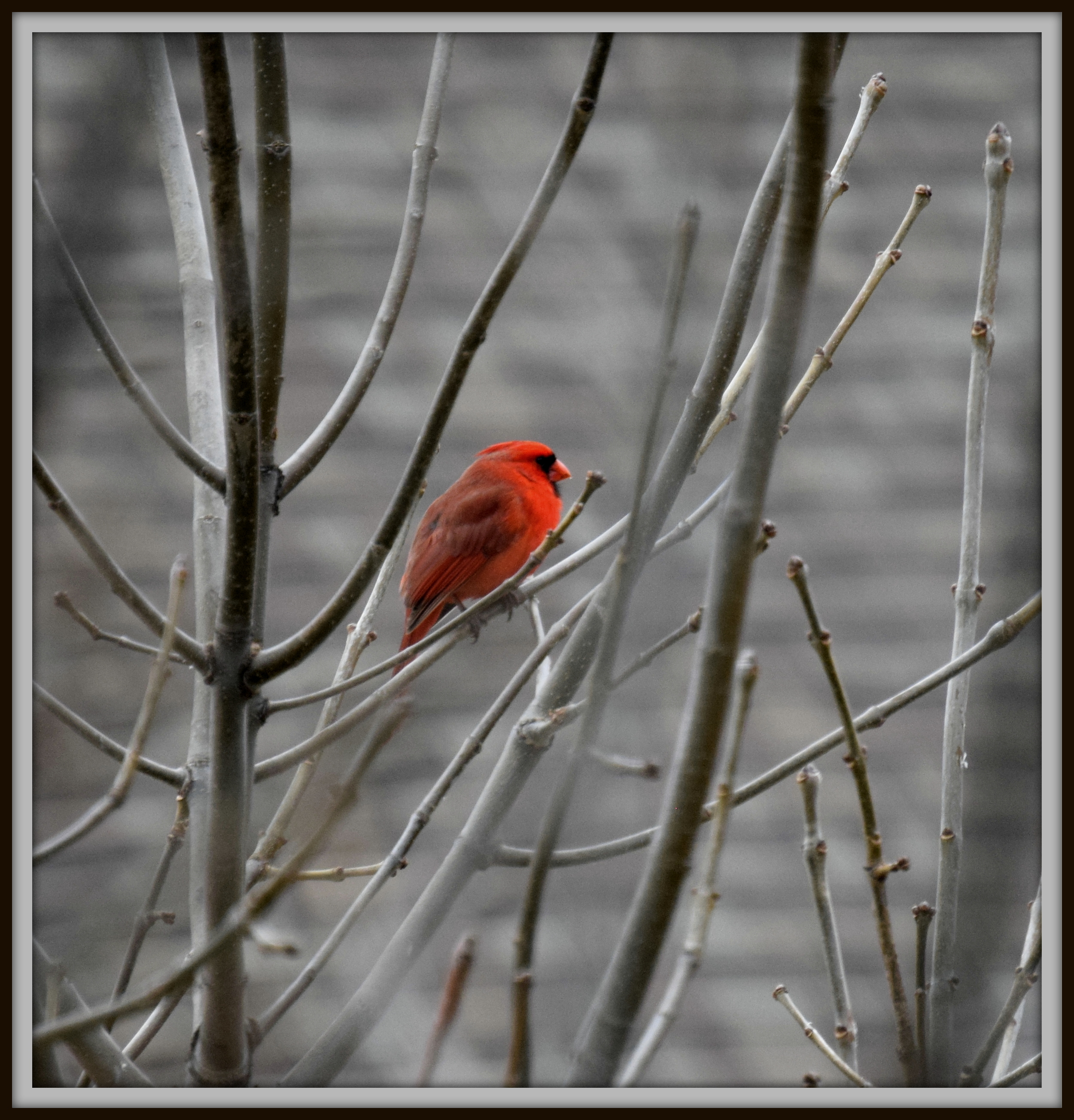
A male cardinal brightens an otherwise drab scene.

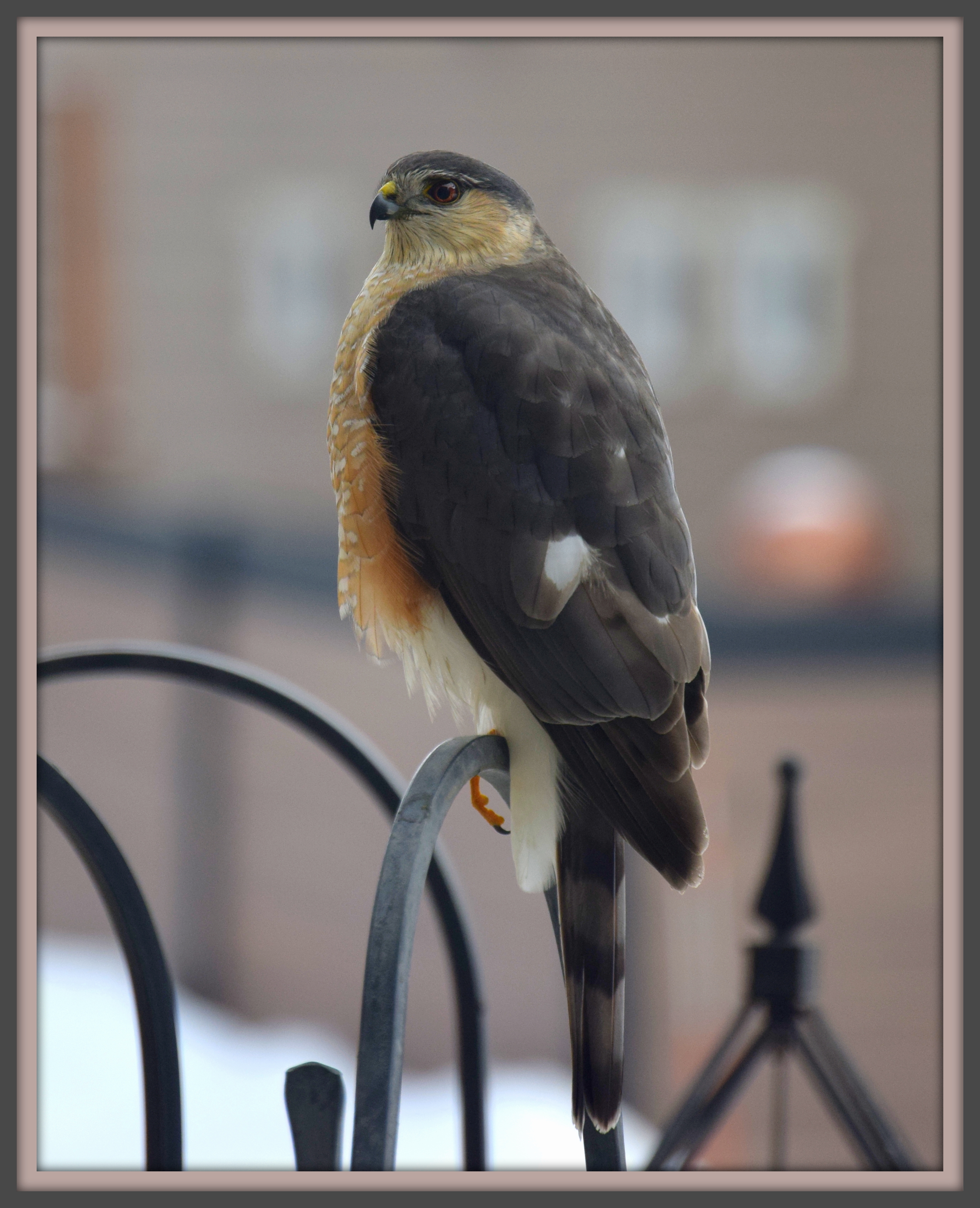
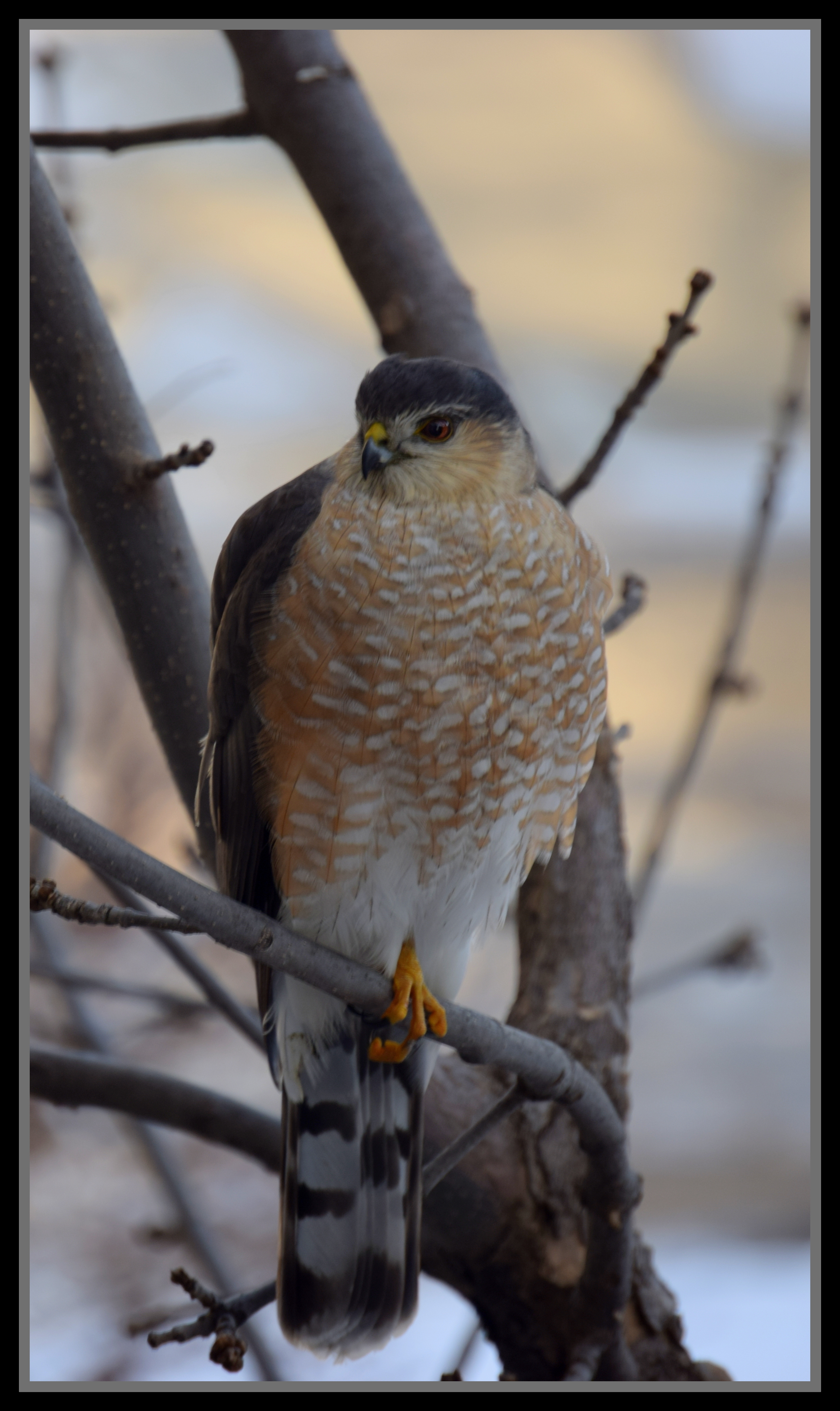
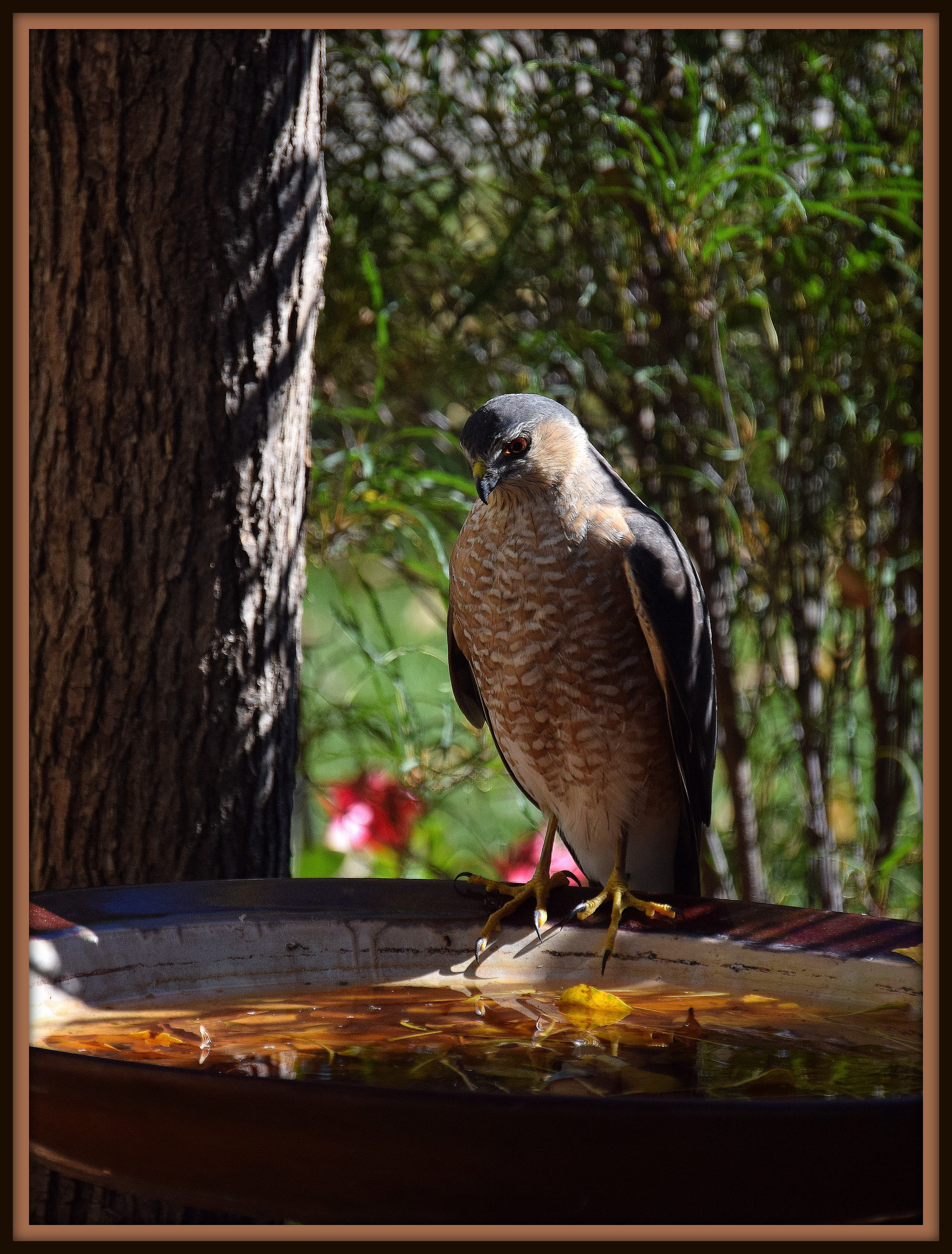
A Sharp–shinned Hawk Perches On Our Bird Feeder
I was at my computer
when I heard
a familiar, loud thunk.A bird had crashed
into the window.In the best case scenario
it would eventually
recoup and
live to fly another day.
Or, it was
lying dead on the patio.Fearing the latter,
I was reluctant to look.When I
finally decided
to steal a quick peek,
I found myself
face-to-face
with a hawk
beginning to dine
on a dove.In my mind’s eye
I saw the pure panic
of the dove
as the hawk swooped in
and, unable to scramble
fast enough,
exited in the wrong direction,
smashing into the glass.Locking on my gaze
for but an instant,
the hawk
snatched up the dove
and flew away.Hawks have discovered
suburban bird feeders
are a great place to
score an easy meal,
especially in
the dead of winter
when the ground
is covered with snow
and temperatures
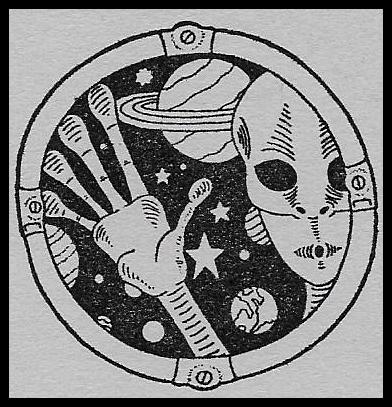
are in the teens.Stephen Hawking
has warned against
mankind’s compulsion
to broadcast our location
to the rest
of the Universe,
postulating that
alien life forms
may not be nearly
as cute and cuddly
as E.T.They might just find
us to be
an irresistibly
tasty treat.
YUM!
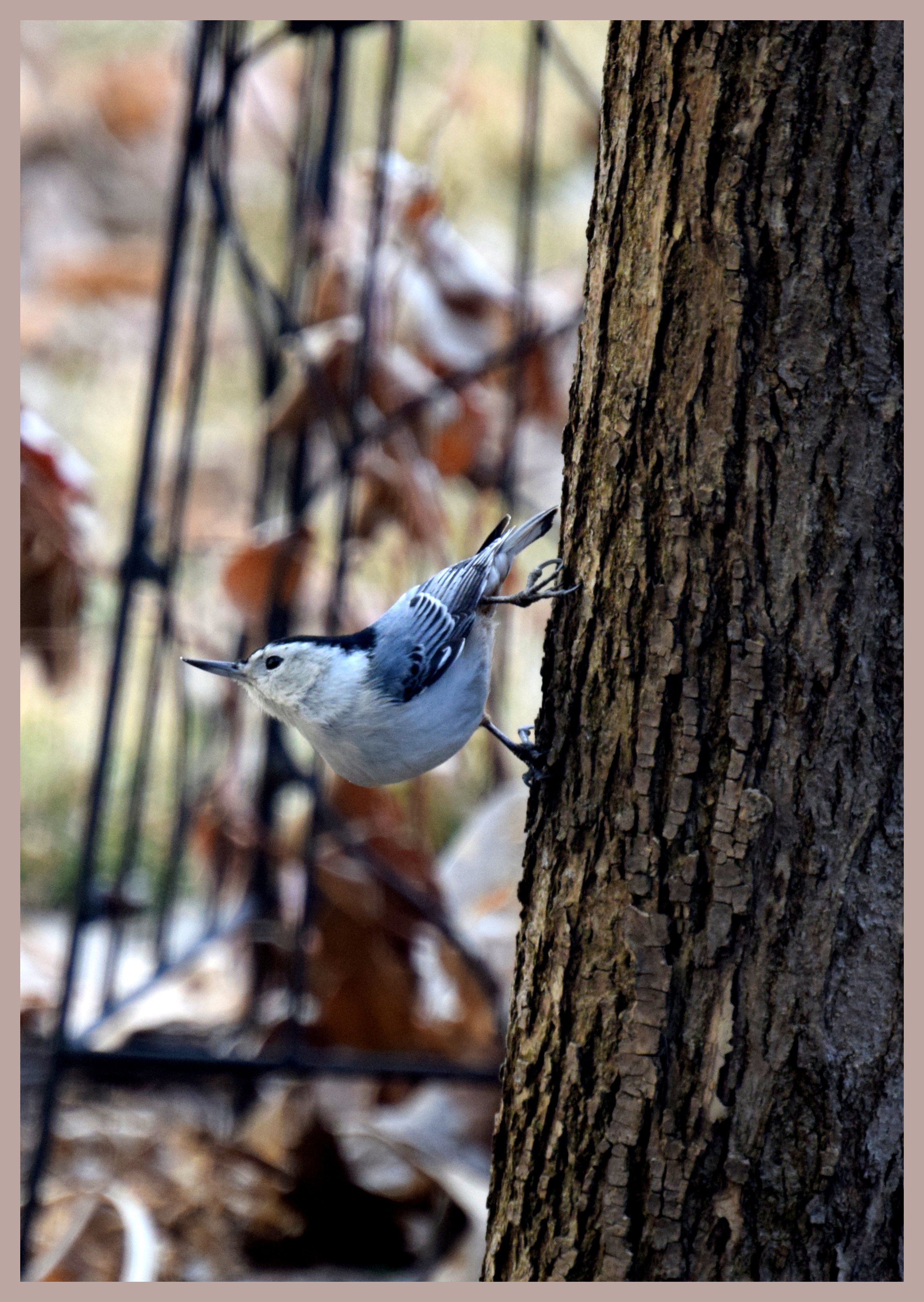
If you simply flex your knees
Walking down a tree’s a breeze
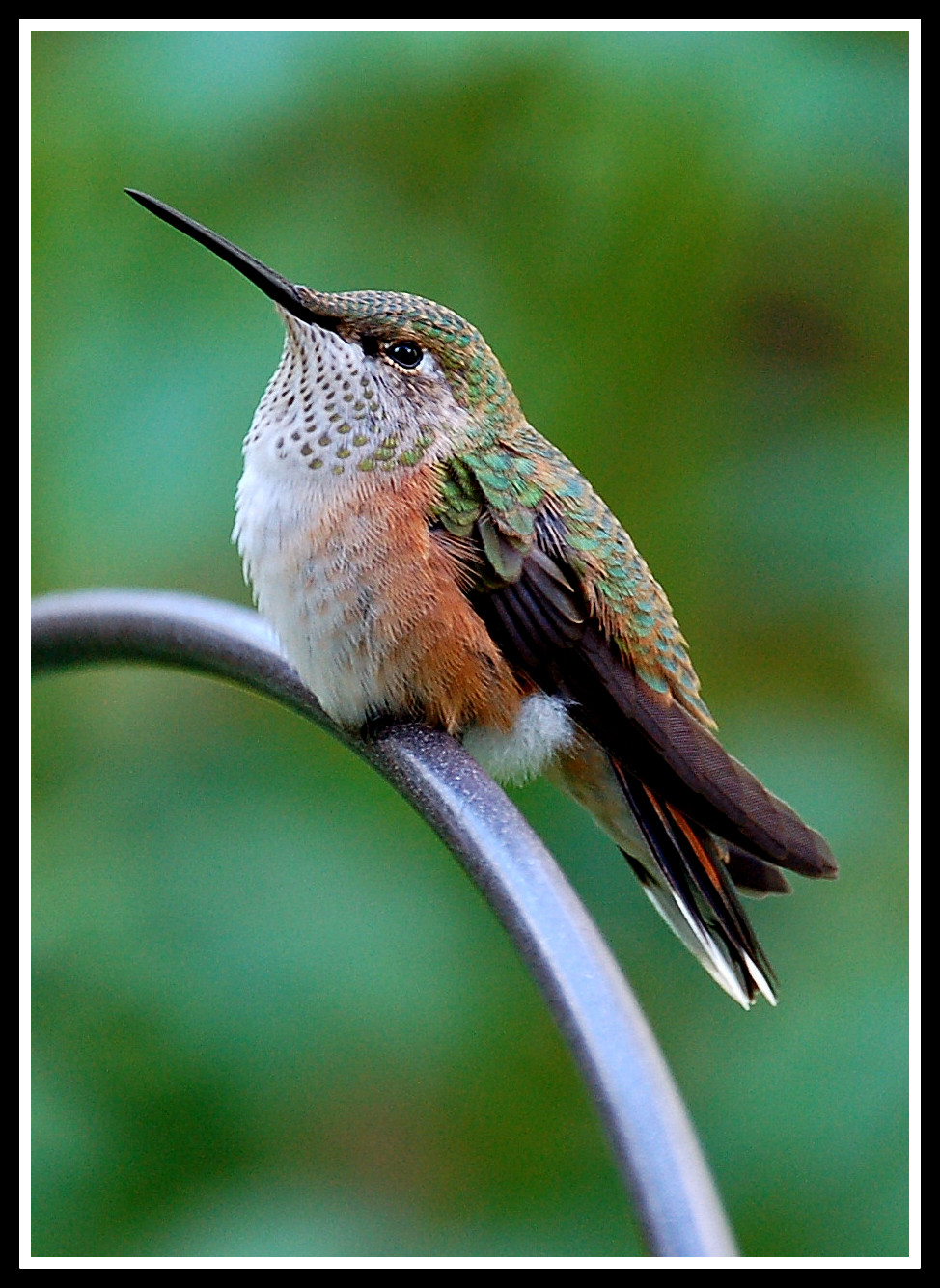
A Broad-tailed Hummingbird – Estes Park, Colorado
Weighing about as much as a nickel,
hummingbirds are the smallest birds
in the world.Its brain comprises more than four percent
of its total body weight, the largest
proportion of any bird.Because of their small size, hummingbirds
approach the physical limits of existence
for warm-blooded animals.The average life span of a hummingbird
is three to five years.Hummingbirds can hover, fly backwards,
forwards, and even briefly fly upside down.With an average flight speed of 25 to 30 mph,
a hummingbird can dive at 60 mph.A hummingbird’s resting heart rate is 250 bpm.
When hovering, their heart rate can reach
1,300 bpm.They consume nectar as well as small, soft
insects for protein.Hummingbirds may visit up to 3,000 flowers
per day.Females develop regular feeding routes which
are carefully designed so individual flowers
are visited at intervals allowing just enough
time for them to refill with nectar.Males do not participate in rearing the young,
leaving females to handle that task alone.*In memory of Della Bowman, a hummingbird enthusiast.
 The Great Backyard Bird Count is February 12-15, 2016
Raptor Rapture
Right on cue, a Sharp-shinned Hawk
has been a frequent visitor in the area
as temperatures nose-dived in December
and snow accumulated on the ground.
A downy woodpecker grabs a quick snack.
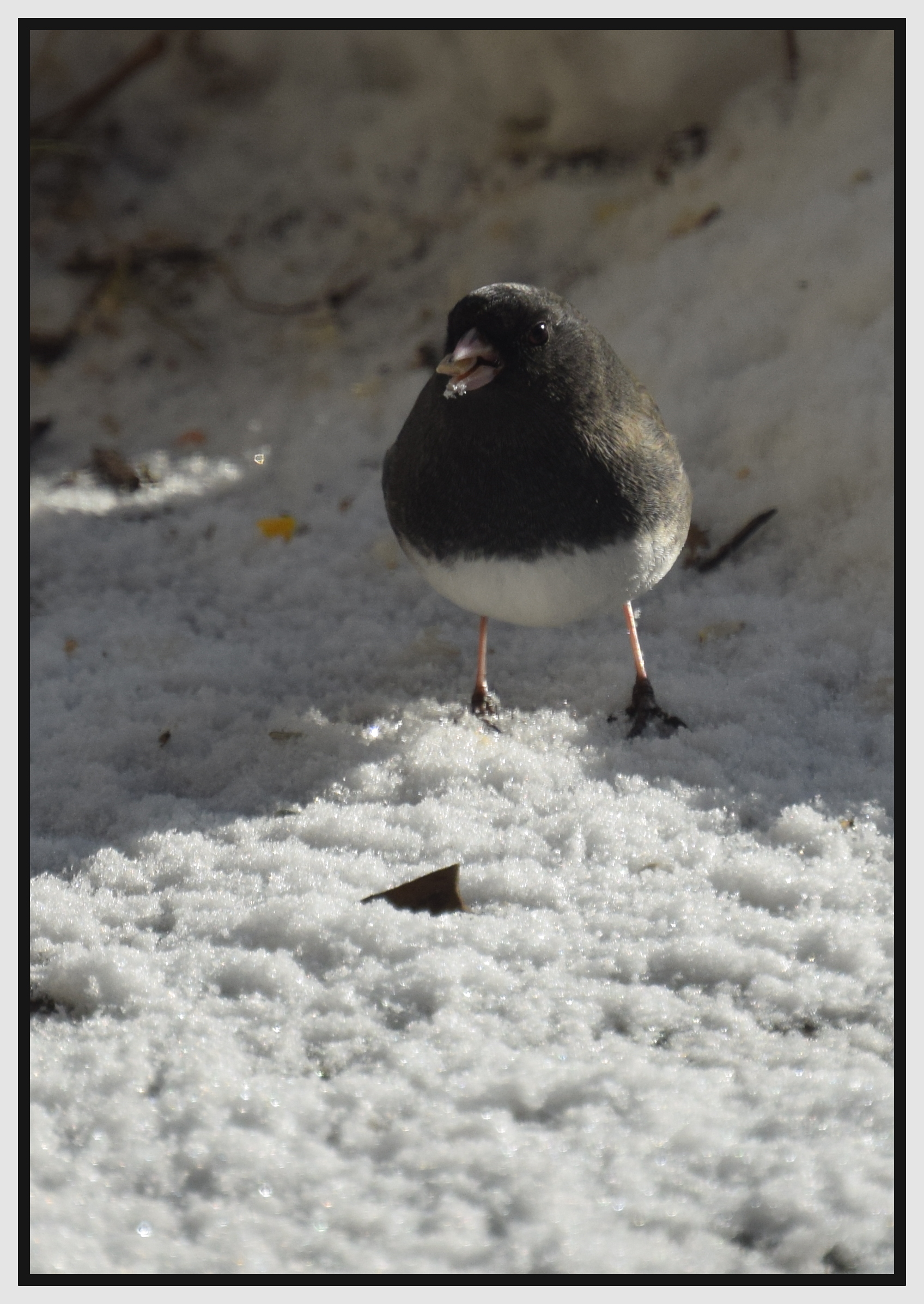
Crisscrossing along the ground
In search of seed yet to be foundShades of gray dart all around
As groups of juncos now aboundHearty souls that brave the cold
Only heat to them grows oldIn early spring they wing away
To return again come winter days
Throughout October
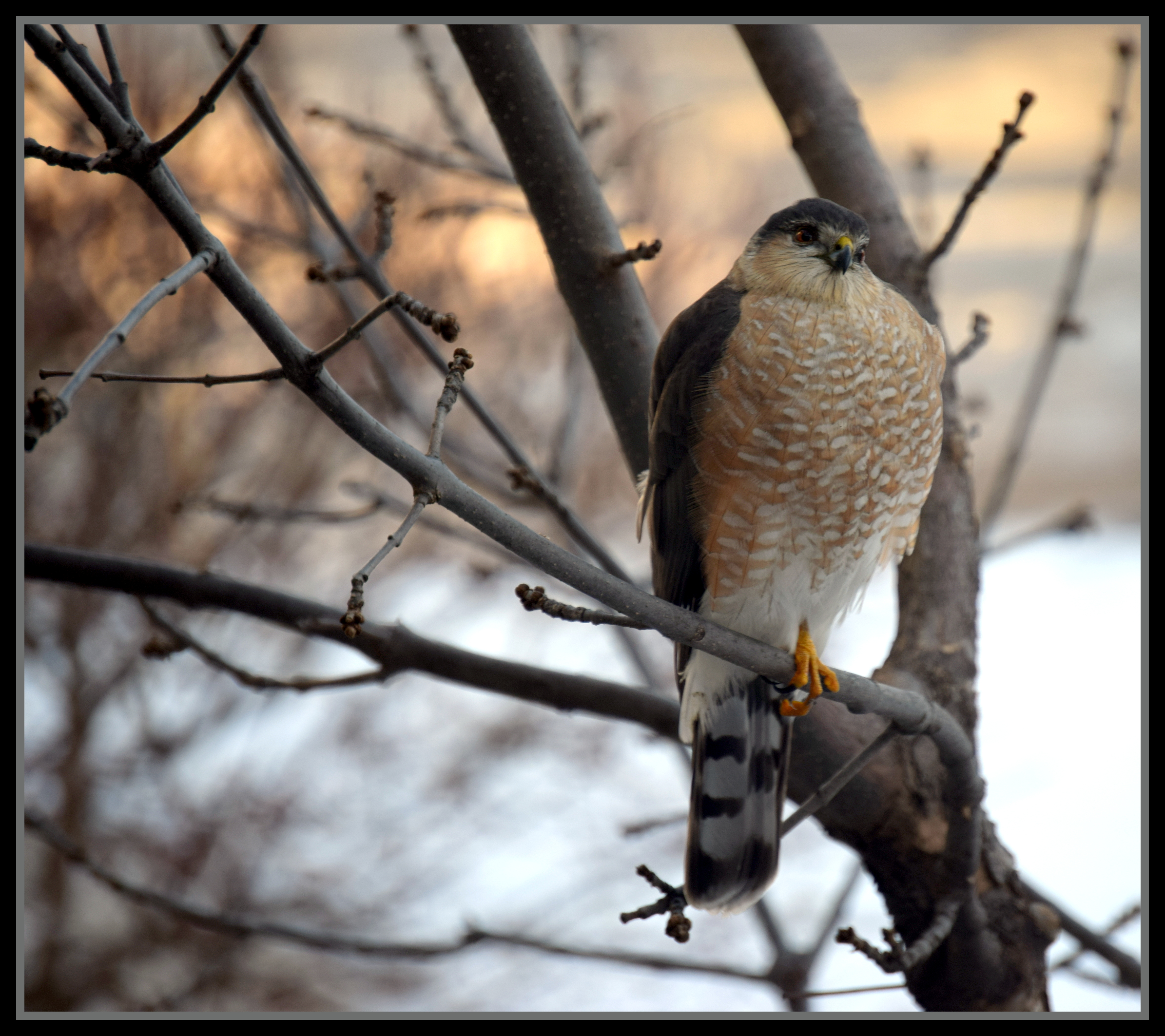
A Sharp-shinned Hawk
Was a regular fixture
In the neighborhood.This is somewhat
Out of the ordinary
As they typically are
Observed during the
Cold winter months.He looks to be plotting
His next move….or
Maybe just resting.
Like a mother hen,
I fuss over
and am protective of
the birds
frequenting our feeders.In the fall,
I monitor the nectar
to assure a steady supply
for the hummingbirds.
If a regular hummer
is absent for a few days,
I worry something has
happened to it.I chastise the squirrels
when they empty
the peanut butter log,
for they are depriving
the nuthatches and
woodpeckers.When sparrows swarm
the sunflower hearts
feeder and wipe it out,
I fret about the hungry
goldfinches.Of course, in reality,
birds forage for food
quite effectively
on their own.
They won’t starve
if the feeders run dry.I must admit my concern
doesn’t extend equally
to all birds.
I have my “A” list:
woodpeckers, goldfinches,
nuthatches, cardinals,
hummingbirds and chickadees.If a bird flies into a window
or is devoured by a hawk,
I hope it’s a starling, sparrow,
dove or grackle,
not one of my ‘favorites’.Unfortunately,
it’s not such a big leap
to apply similar
judgmental thinking
to human beings.If a sixteen-year-old
drives her car at high speed
into a light post and dies,
we are devastated.When a homeless man
freezes to death
sleeping under a bridge
in the winter,
there is sadness, but
not necessarily the same
gut-wrenching pain.We all could do a better job
of treating starlings
like cardinals
and
caring about
our fellow man.



 Out of My Write Mind