
Anyone of my vintage
is well acquainted
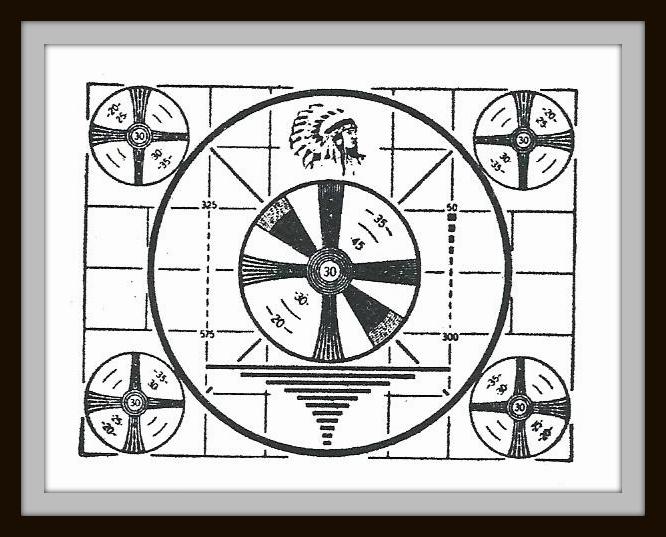
with this iconic image
from the early days
of television.The graphic of the Indian
and each of the various
patterns on the chart
served a specific purpose.They allowed for
adjustments to cameras,
as well as studio and
home monitors.The Indian-head
test pattern
often would appear after
the formal television station
sign-off, following
the playing of the
national anthem.With the arrival of
color TV in the 1960’s,
an alternate test card
of color bars became
the one of choice.As much as I enjoy
the Hi Def, high tech
of today’s television,
I still wax nostalgic for
my Native American
friend of long ago.I can’t help but
wonder
how the chief would look
on a 55” screen.
The 1950’s
You’re Stepping On My Toes
There was a dance studio located
in a suburb
just a few miles away
from Kirkwood.A rite of passage for preteens
involved learning
the basics of ballroom dancing,
while hopefully
picking up a few social graces
along the way.Let’s face it,
there’s nothing quite like herding
a gaggle of giggling girls
and a bevy of
bashful, bumbling boys
onto the dance floor
to go toe to toe for an hour
week after week.The roster of dance steps
included such archaic
all-time favorites as the
waltz, foxtrot, and cha-cha.In short order, it became clear
there wasn’t a future
Fred Astaire or Ginger Rogers
amongst us.While the dance moves
have long faded from memory,
a slight tinge of
embarrassment
from those days
lingers still.One, two…cha-cha-cha
Three, four…find the door.

She Lost Her Way With A Map
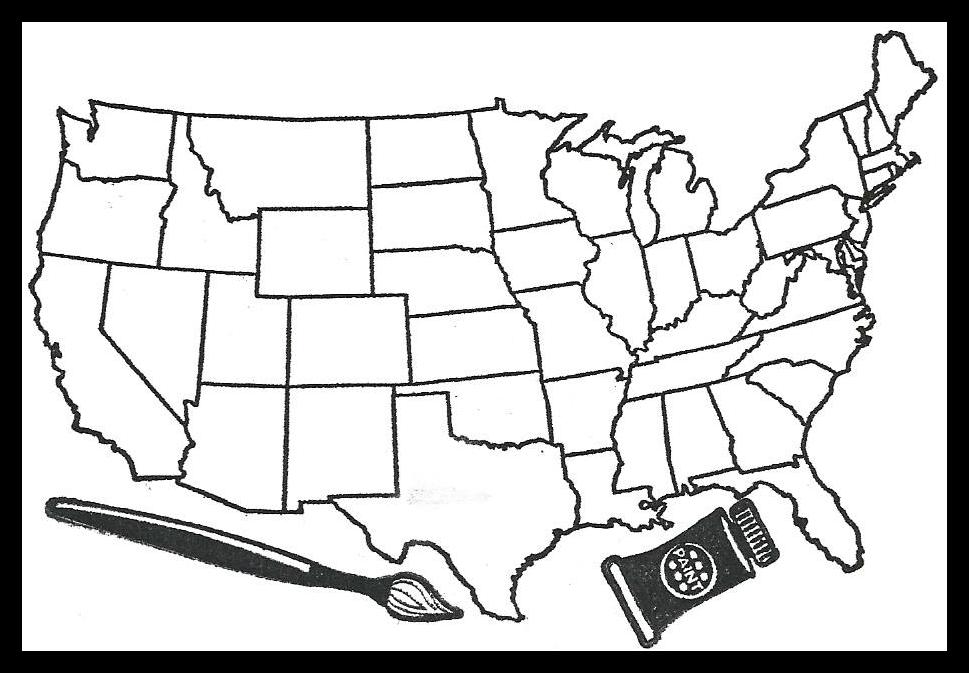
Mrs. Clement taught fifth grade at Tillman Elementary School.
One of her standard classroom projects was creating a relief map
of the United States. It served the dual purpose of mastering
geography, while incorporating an art activity.
On a piece of Masonite, we traced around a stencil of the United States.
Then we mixed up a concoction of flour, salt and water, which was
spread on the board and molded to form mountain ranges, river valleys,
plains, etc.
This stage was beloved by students, for they managed to smear goop
all over themselves, their friends and the entire classroom. I suspect the
school custodians had a much different take on the situation.
Once the mixture dried, it was time to add color to the map to portray
varying elevations of the land and to demarcate rivers and lakes. The final
step involved applying a coat of varnish to preserve the finished masterpiece.
Throughout the project, Mrs. Clement kept herself right in the thick of
things. She busily circled the classroom, moving from student to student, refashioning mountain ranges or adjusting colors to suit her vision.
Offering unsolicited help was an engrained feature of Mrs. Clement’s
teaching style. I recall being somewhat confused and mildly irritated
by her intervention on more than one occasion while in her class.
Sadly, the project was never completely out of her hands, for she
was incapable of fully entrusting it to us. In micro managing every
step of the process, the outcome was much more hers, than ours.
Letting go can be difficult. But, unless it happens, individual initiative
and creativity never see the full light of day.
Caught Red-Handed
It happened in second grade.
A Weekly Reader had been placed on each desk.
It only took a second for me to notice.
The corner on my copy was badly crumpled.
Actually, it was slightly torn.
This imperfection was starting to
make my stomach churn.
What was I to do?
Dan, the student seated directly behind me,
was absent that day.
I glanced at his desk and noticed immediately
his copy was pristine.
Quickly, I made the switch….his perfection…
in trade for my dog-eared.
The deed was done.
With a crisp, clean copy in hand,
all was well with the world.
A sense of calm enveloped me.
My serenity, however, was short-lived.
In no time flat, the teacher was at my side.
She had witnessed the swap.
The fact, as I explained, my Weekly Reader
was blemished from the get-go, fell on deaf ears.
Life is tough when you’re a kid far too detailed
for your own good.
Where In The World Is Waldo/Sandy?
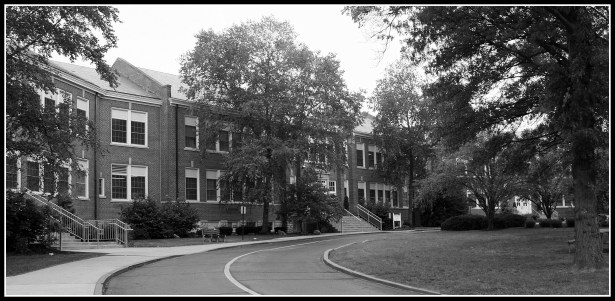 Tillman Elementary School, Kirkwood, Missouri
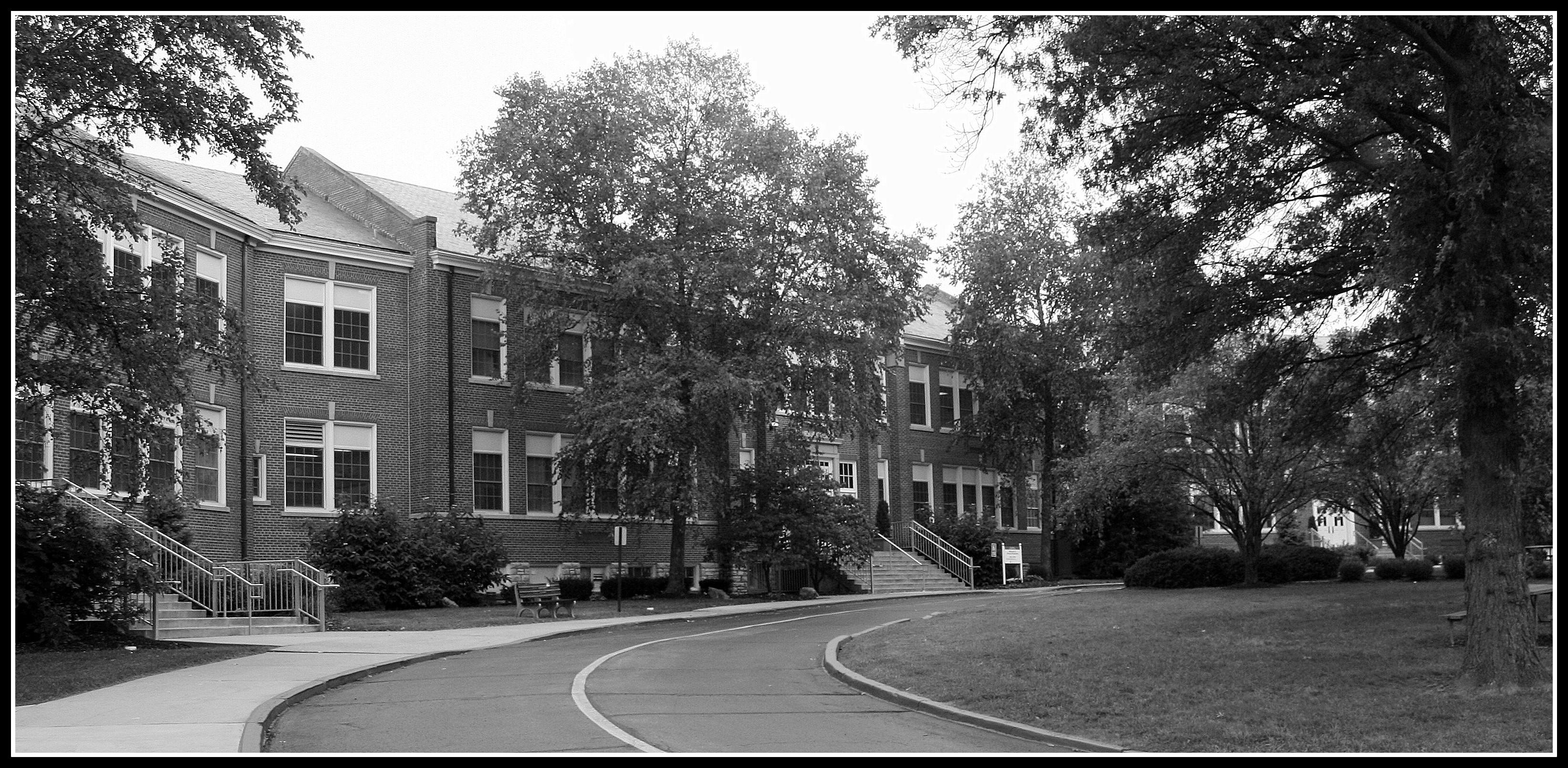
Group Class Pictures


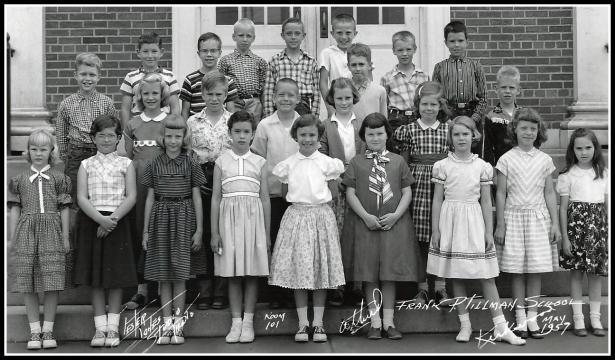
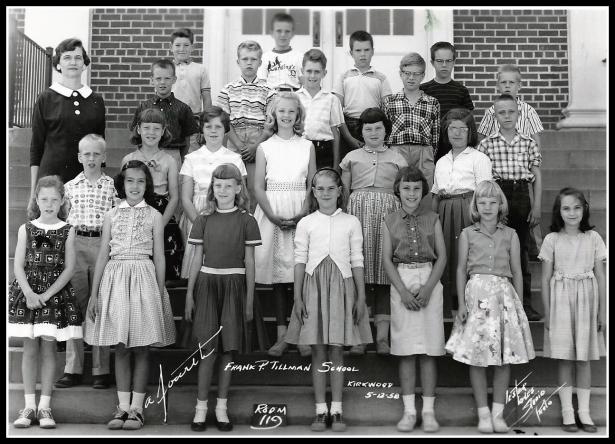
Top To Bottom: 2nd Row, 3rd From Left; 2nd Row, Center; 1st Row, 4th From Left; 1st Row, 2nd From Left
Through The Eyes Of A Child
 When will we put race
 aside
aside
See instead what lies inside
Not as different or worth less
Just as valued as the rest
At last abate our angry cries
Find the place where peace resides
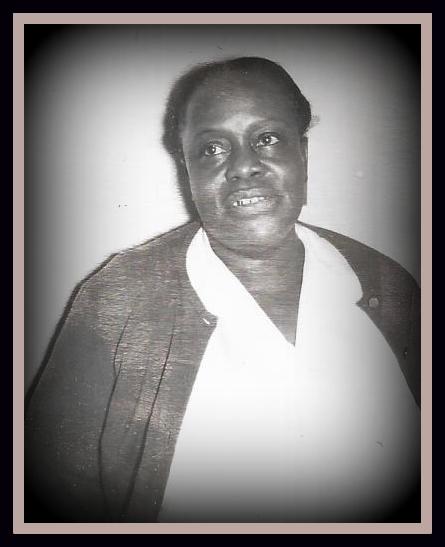

My first experience with race relations was as a child in the 1950’s and early 1960’s in Kirkwood, Missouri, a suburb of St. Louis, just a stone’s throw away from Ferguson.
Like most post WWII families, dad was the breadwinner, while mom stayed home to tend to the children…all three of us rug rats…born between 1945 and 1948.
That’s when Cleola and Liz entered the picture. Cleola helped with household chores of all types, from cleaning, to cooking, to babysitting, to laundry (done in the early days by hand on a wash board and hung on the line outside to dry).
She rode the bus from the heart of downtown, where the vast majority of African Americans lived, to Kirkwood, several days a week. Liz made the journey on Friday evening to join her and both would babysit the three of us while our parents enjoyed a night out with friends.
I have fond memories of hot summer evenings when Liz would walk with us to the neighborhood drug store to get an ice cream treat. Onlookers to our trek never gave us a second glance, automatically assuming that our parents knew where we were and trusted this individual to watch over us.
Bystanders today witnessing this scene would probably fire up their cell phones immediately, dialing 911 to alert the police to an African American man who had abducted three Caucasian children. Our parents would be deemed unfit by Social Services for letting us out of their sight, and we would be placed in foster care.
The innocence of youth did not completely shield us from the harsh reality of racial discrimination. We were aware Cleola and Liz’s day to day existence was in stark contrast to our own.
Yet, within the confines of our home, things could be different. Setting the example for us to follow, our parents always treated Cleola and Liz as members of the family. We in turn regarded them with the same respect and implicit obedience accorded all adults in our lives.
But, there was more to it than that. In some ways, we were the children they never had, while, for us, they were the grandparents who had passed away out of our lives, too soon.
It is human nature to fear that which is and those who are unfamiliar to us.
With familiarity comes understanding.
It is distance which breeds contempt.
 Out of My Write Mind